In the age of network information, digital management holds a unique position, sweeping across various industries. So-called enterprise digital transformation essentially involves using technologies and tools such as the internet, cloud computing, and big data to more effectively improve the mechanisms and efficiency of enterprise operations, thereby better promoting enterprise development. Digital lifestyle refers to a new form of existence based on digital technologies such as the internet, big data, and artificial intelligence, fully integrated into daily life, encompassing all aspects of work, consumption, social interaction, healthcare, education, and travel. Digital life is a lifestyle based on the internet and digital technologies, improving life efficiency and quality through the integration of technological applications via virtual networks.
Understanding Digital Life
Digital life refers to transforming traditional lifestyles into more convenient and efficient modes of living through digital technologies and the internet. The following is a detailed explanation of digital life:
Technological Foundation:
Digital life primarily relies on digital technologies and the internet, which make the transformation of traditional lifestyles possible.
The Role of Artificial Intelligence:
In digital life, artificial intelligence plays a crucial role. It utilizes technologies such as natural language processing and machine learning to optimize information processing flows, improve quality of life, and drive overall social progress.
Enhanced Convenience:
Information Management: Artificial intelligence simplifies information management by efficiently filtering and recommending personalized content, such as through search engines and intelligent assistants, accelerating information retrieval and improving work efficiency.
Smart Home: Smart home systems utilize technologies like voice recognition and remote control to achieve intelligent management of home devices, providing users with a convenient and comfortable living experience.
Smart Healthcare: Smart healthcare technologies use intelligent analysis to provide users with personalized health management services, enhancing the convenience of life.
Social Progress:
Increased Productivity: Through automation and intelligentization, artificial intelligence can replace repetitive, tedious, and dangerous tasks, improving productivity and quality.
Economic Development: Applications of artificial intelligence, such as industrial robots, autonomous driving technology, and big data analytics, drive economic and social development, efficiently utilize resources, and enhance competitiveness.
Challenges:
While digital life brings many conveniences, it also faces challenges, such as data privacy protection and ethical issues. These issues require collective societal consideration and solutions to ensure that artificial intelligence and digital technologies bring genuine benefits to humanity.
Digital living is a new lifestyle that leverages digital technology and the internet to make life more convenient and efficient. It brings improvements in information processing efficiency, quality of life, and social progress, but it also faces challenges and problems.
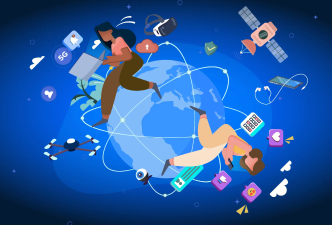
Challenges and Problems of Artificial Intelligence in Digital Living
First, the development of artificial intelligence requires massive amounts of data, but data acquisition and privacy protection have become difficult issues. People generate a large amount of personal data, such as location information and health data, during the use of smart devices and applications. How to protect the security and privacy of this data has become a crucial issue. Second, the development of artificial intelligence also brings some ethical and moral questions. For example, does artificial intelligence possess fairness and objectivity in decision-making and judgment? Will it have negative impacts on human work and life? These issues require collective consideration and solutions to ensure that the development of artificial intelligence brings more benefits to humanity.
Conclusion
In short, digital living is a lifestyle that transforms traditional lifestyles and activities into digital forms through digital technology and the internet. As an important component of digital living, artificial intelligence, by simulating human intelligence and learning abilities, provides people with more convenience and possibilities. Artificial intelligence in digital living can help people better manage and process information, improve quality of life, and promote social development and progress. However, the development of artificial intelligence also faces some challenges and problems that require collective thought and solutions. Only through the continuous development and application of artificial intelligence and digital technologies can we enjoy a more convenient, efficient, and comfortable digital life.